
There’s a persistent myth that Indian food is built for one temperature setting: hot, spicy, and heavy. Anyone who’s spent real time in India knows that’s only half the story — the cuisine has centuries of practice cooling people down in brutal summer heat, long before air conditioning existed. July in Sunnyvale rarely hits the extremes of a Delhi summer, but the same principles apply on any warm Bay Area afternoon, and Desi Dhaba’s menu has the tools to prove it.
Why Hot Climates Produce Cooling Food Traditions
It’s not a coincidence that some of the most refreshing food and drink traditions in the world come from hot-climate cuisines. When you’re cooking and eating in serious heat, you need food that replenishes hydration, cools the body, and doesn’t add to the discomfort of the temperature outside. Indian cuisine answers this with a whole category of yogurt-based drinks, cooling chutneys, and lighter preparations specifically designed to counterbalance the heat of both the weather and the spice level of the main dishes.
Mango Lassi: The Star of the Cooling Menu
The Mango Lassi is Desi Dhaba’s most direct answer to a hot day. Built from yogurt, mango, and a touch of sugar, blended into something between a smoothie and a milkshake, lassi exists specifically to do double duty: cool the body down and counterbalance the richness or heat of a curry-forward meal. It’s a centuries-old tradition in Indian dining — lassi was never invented as a novelty drink, it was invented because someone needed a practical way to survive eating spicy food in 100-degree heat.
What makes the mango version specifically well-suited to July is the seasonal logic behind it. Mango season in much of India peaks in the hottest months of the year, which means the fruit that ripens during the worst heat is also the fruit best suited to cooling drinks — a kind of culinary symmetry that long predates modern nutrition science.
How to Use Lassi Strategically During a Meal
Most people order a lassi as an afterthought, but it works best as a deliberate part of how you eat the meal:
- Order it alongside your spiciest dish, not after finishing it — sipping throughout the meal keeps the heat from building up rather than trying to put out a fire that’s already raging.
- Pair it with chaat for the ultimate hot-day combination: the tang and crunch of chaat balanced by the cool creaminess of the lassi.
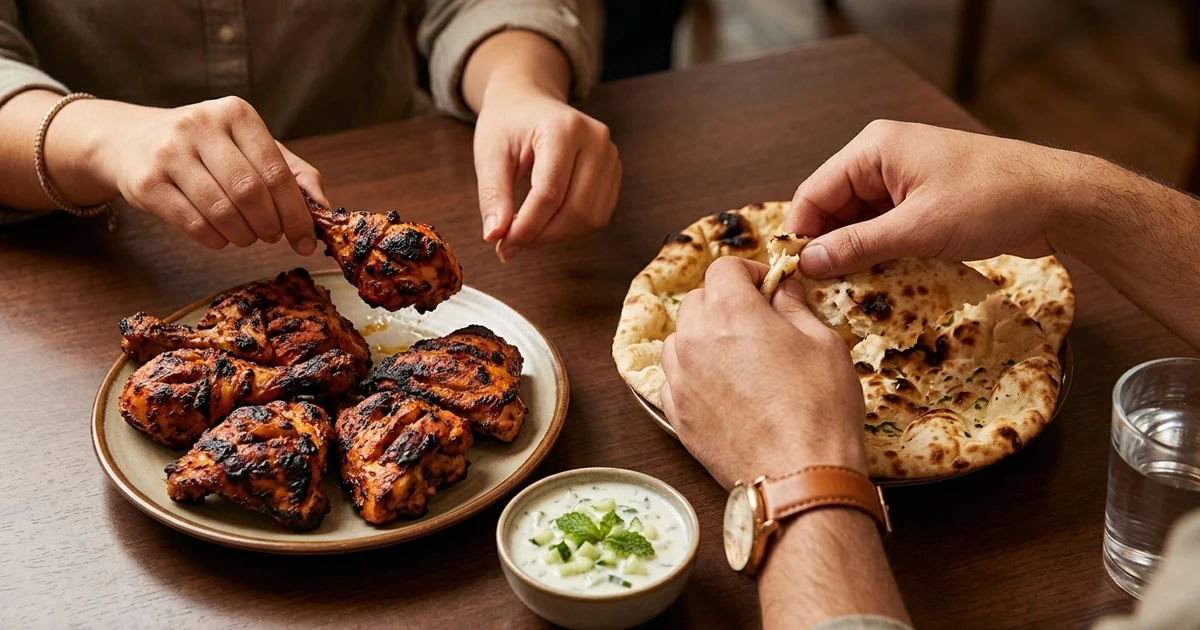
- Use it as a buffer between bites of tandoor-charred meat, where the char and smokiness benefit from a creamy, cool counterpoint.
Beyond Lassi: Other Ways the Menu Handles Heat
While Mango Lassi is the most direct cooling option, the broader structure of an Indian meal is built with heat management in mind even when you’re not actively trying to cool down. Yogurt-based preparations, raita-style cooling sauces, and the practice of pairing rich curries with simple basmati rice all serve a similar function — diluting and balancing intensity rather than stacking heat on top of heat. Even the act of eating with naan or rice between bites of a spicier curry is a built-in cooling mechanism most diners do instinctically without realizing why.
Why This Matters for a Sunnyvale Summer Specifically
Bay Area summers don’t get the humidity of a South Asian monsoon season, but dry afternoon heat still changes what people actually want to eat. A heavy, all-curry meal at 2 PM on a 90-degree July afternoon hits differently than the same meal in cooler weather — and that’s exactly the gap a Mango Lassi or a chaat-and-lassi combination fills. It’s a small adjustment to a typical order that makes the whole meal feel more suited to the season.
Ordering for the Season
If you’re planning a summer get-together, a few practical additions worth considering: order a round of Mango Lassis for the table rather than treating it as an individual add-on, especially for outdoor or early-evening gatherings where the heat hasn’t fully broken yet. For office lunch orders during a heat wave, adding lassi to an otherwise typical curry order is a small upgrade that makes a noticeable difference in how the meal sits with you through a hot afternoon.
As always, ordering direct through online-ordering.innowi.com/branch/desidhaba means every Mango Lassi and every curry adds up toward rewards points, and orders over $50 — easy to hit once you’re adding drinks for a group — qualify for free delivery.
A Cuisine Built for More Than One Season
Indian food’s reputation as “always heavy, always spicy” undersells centuries of culinary problem-solving around exactly the kind of heat Sunnyvale sees in July. The Mango Lassi is the clearest example on Desi Dhaba’s menu, but it’s part of a much larger tradition of building meals that account for climate, not just flavor. Next time the temperature climbs, let the menu do what it was actually designed to do.
This page is part of Desi Dhaba’s July 2026 Sunnyvale Indian halal dining guide. See our companion pieces on what chaat is and how to build a halal-friendly Fourth of July spread.